Designing for Neuroinclusion & Neuroaesthetics: CDW Panel Highlights
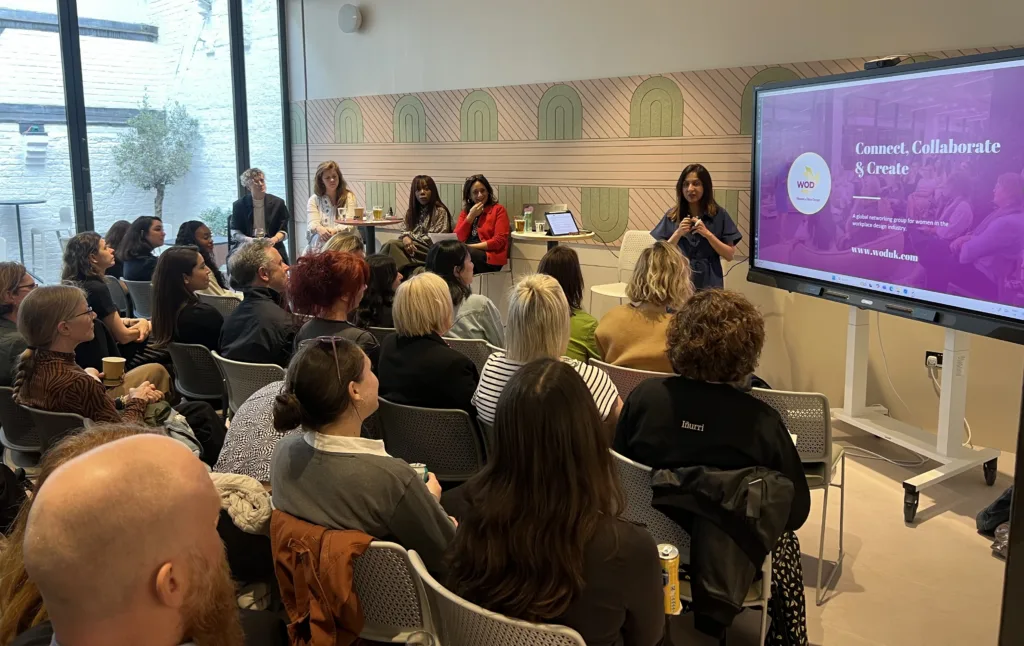
During this year’s Clerkenwell Design Week, we were delighted to open our doors and host an incredibly insightful presentation and panel discussion hosted by Women in Office Design (WOD). Centred around the theme of designing for neuroinclusion & neuroaesthetics, the evening reminded everyone in attendance that great workplace design is, at its heart, an act of care.
What began as a conversation about workplace performance quickly revealed a deeper truth: neuroinclusive design is both a strategic business imperative and a human necessity. It is rooted in the simple, radical understanding that we all experience physical space differently.
The evening began with an opening presentation by Megan Dobstaff (Principal Design Director, Gensler), who shared her pioneering thinking behind neuroinclusive design. Highlighting Gensler’s Virgin Media O2 project, Megan demonstrated a true masterclass in inclusive-by-design thinking, showing how corporate spaces can be intentionally mapped to support diverse neurological needs.
Following the presentation, Harsha Kotak (Founder Director, WOD) chaired a captivating panel discussion featuring industry experts Gurvinder Khurana (Director, M Moser), Megan Dobstaff (Gensler), Rosie Holmes (Group ESG Lead, Cast Group), and Zoe Yakubu-Sam (Workplace Strategist, M Moser).
Here are the key takeaways and highlights from their discussion:
1. Designing for variation, not a “fictional norm”
The panel noted that thinking of “neurodiversity” as a niche category is becoming an outdated concept, simply because every human brain is different. Rather than designing for a fictional “average” user, the future of workplace design lies in planning for natural human variation.
2. Agency, control, and real choice
True neuroinclusion cannot be achieved with a one-size-fits-all layout. Variety must be the foundation of the modern office, giving people real choice, real agency, and genuine control over how, when, and where they work throughout the day.
3. Acoustics as a tool for inclusion
Acoustic considerations are not design luxuries; they are fundamental preconditions for people to do their best work. For many individuals, every background noise registers as a separate, competing distraction. Neglecting office acoustics leads directly to cognitive depletion and fatigue.
4. Challenging the cost of presenteeism
The panel tackled the hidden cost of presenteeism—the phenomenon where people are physically present at their desks but unable to properly function, engage, or contribute. This represents a massive loss of human potential when a physical space fails to adequately hold and support the people inside it.
5. Normalising “stimming” and self-regulation
The conversation brought valuable awareness to stimming (short for self-stimulatory behaviour). These small, repetitive movements or sounds are vital tools that help individuals regulate their sensory input, focus, and feel at ease. Classifying and designing spaces that normalise these behaviours is essential for an inclusive culture.
6. Intentional workspace geography
The panellists introduced the compelling idea of positioning quiet wellness rooms at the front of an office layout rather than tucking them away at the back. This ensures that anyone needing to step out of the office “buzz” can do so easily, without feeling banished or disconnected from the wider workplace community—a small spatial shift carrying enormous emotional weight.
Ultimately, the discussion reinforced that great design is rarely about finding a single, rigid answer. It requires ongoing conversation, empathy, and the courage to ask the people who inhabit a space what they actually need to thrive.
We left the evening feeling incredibly inspired and deeply committed to pushing these concepts forward in our own workplace solutions and furniture design.
A huge thank you to Harsha Kotak and the Women in Office Design team along with the panellists; Gurvinder, Megan, Rosie, and Zoe for sharing their incredible openness, expertise, and care.