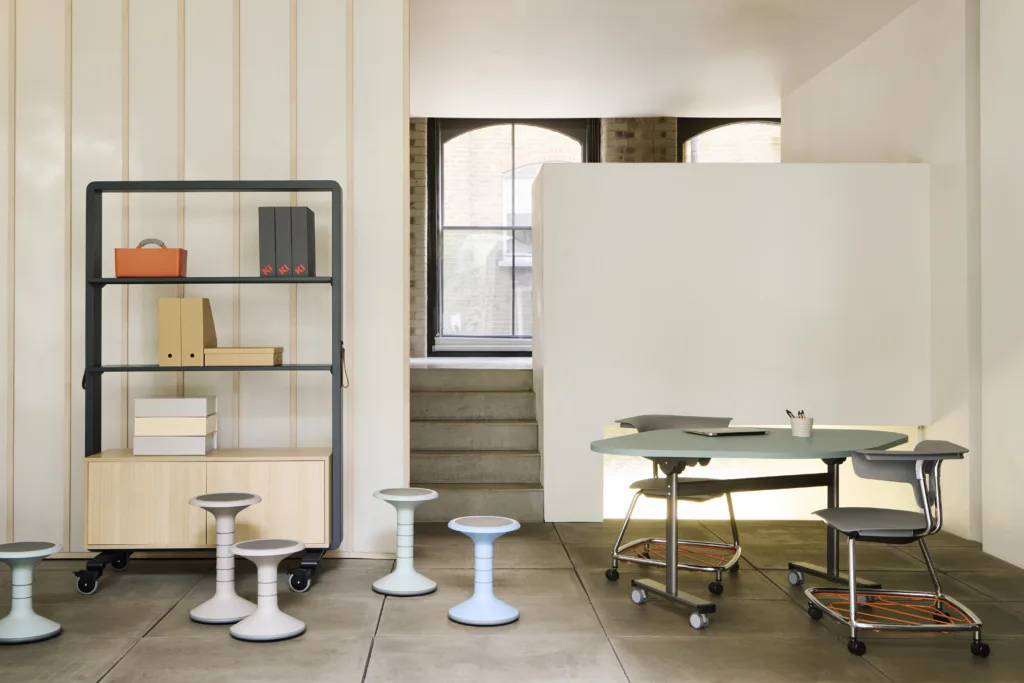
Designing for neurodiversity: How furniture shapes inclusive environments
As awareness of neurodiversity grows across the education and workplace sectors, so designers are rethinking how environments support different ways of thinking, moving, and engaging.
From classrooms to offices, furniture is emerging as a quiet but powerful tool in creating spaces that are more inclusive, adaptable, and human-centred. We tell ABC&D magazine more…
For decades, the environments in which we learn and work have been shaped around a narrow definition of acceptable behaviour: sitting still, facing forward, remaining quiet, and adapting oneself to the space rather than the other way round. As understanding of neurodiversity continues to develop, that approach is increasingly being challenged – not as a specialist concern, but as a fundamental, universal design responsibility.
Neurodiversity describes the natural variation in how people think, process information, and interact with their surroundings. Autism, ADHD and other sensory processing differences are present in every classroom, university and workplace. After all, it is widely accepted that one in seven or more than 15% of the population are neurodivergent.